
Close
Close
In 2021, the Lion Group raised the target of reducing CO2 emissions from its business activities from a 30% reduction (compared to 2017) to a 55% reduction by 2030 (compared with 2017). As the first part of efforts to achieve our CO2 emissions reduction target, we are implementing thoroughgoing energy-saving activities at our various plants, offices and other facilities in Japan and overseas to increase energy efficiency.
Among these, production divisions consume higher amounts of energy, but are aiming to reduce CO2 emissions by 1% or more per unit of production every year through energy-saving activities such as improving productivity and adopting high-efficiency equipment while working to reduce energy loss from utilities in such forms as steam and pressurized air and by recovering heat to save energy. In addition, our offices have set up power-saving projects as they strive to save energy.
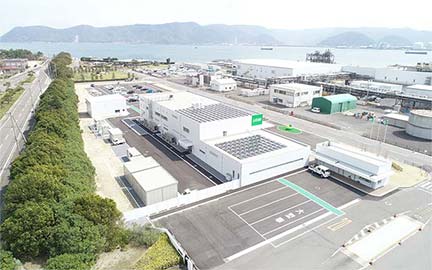
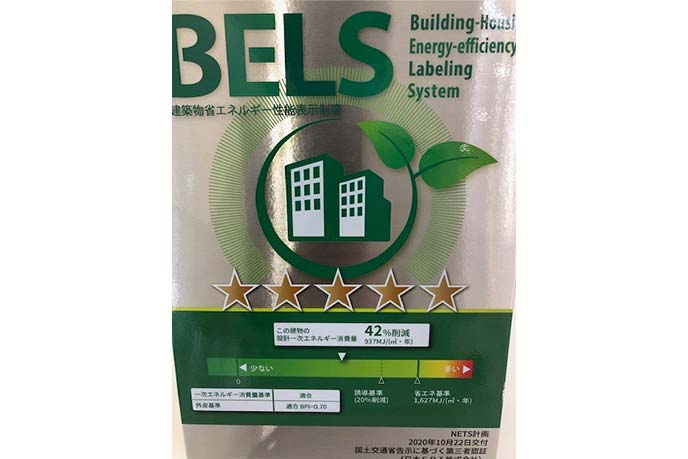
When constructing new buildings, such as plants and employee facility buildings, we strive to implement energy-efficient facility design to reduce energy consumption. In the future, once we have gained a comprehensive understanding of the energy consumption status of all plants, we will discover more ways to conserve energy and achieve further energy savings.
Going forward, we will continue to advance measures to further reduce CO2 emissions.
In 2022, the Group introduced the ICP system in Japan* to promote the reduction of CO2 emissions. Initially, the carbon price for ICP was set at 6,100 yen/t-CO2, but in May 2025, the price applied to capital investment was raised to 13,300 yen/t-CO2, taking into account the external carbon price. This will accelerate the introduction of equipment that saves energy and emits less CO2.
* Lion News Release [Japanese]
CO2 Emissions in Business Activities (Domestic and Overseas)
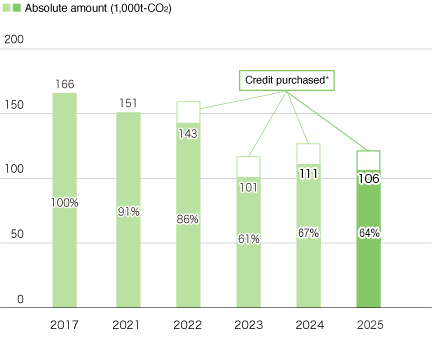
The Lion Group is committed to implementing thorough energy-saving activities but does not expect these to be sufficient to meet its CO2 emission reduction targets. To make up the difference, it will be necessary to utilize renewable energy by such means as installing facilities to generate solar power for in-house use and switching to purchasing electricity from renewable sources.
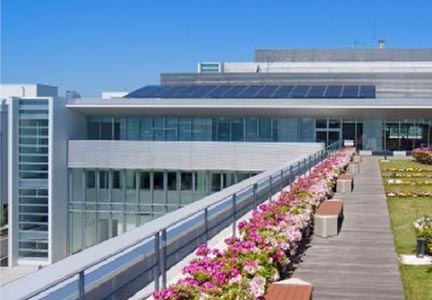
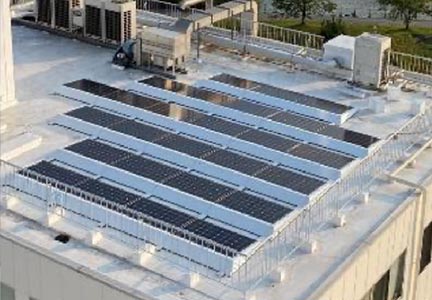
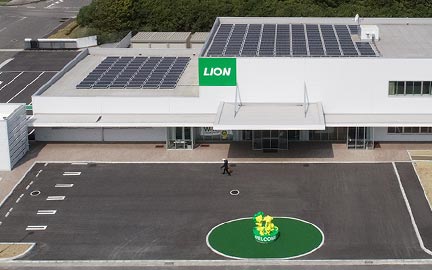
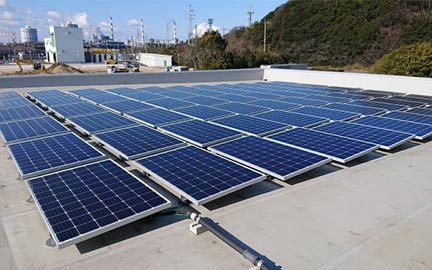
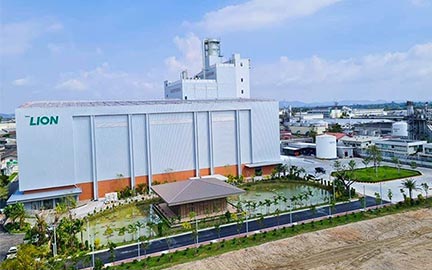
We have already installed facilities to generate solar power for in-house use at the Hirai Office Site. In 2021, we additionally installed such facilities at Lion Chemical Co., Ltd. Overseas, in the same year, a new solar power generation facility was installed and began operation in the building of the new drying tower added to LCT. In 2024, new solar power generation facilities were installed at LCK and SL. We intend to further increase the amount of solar power generated and increase renewable electricity procurement.
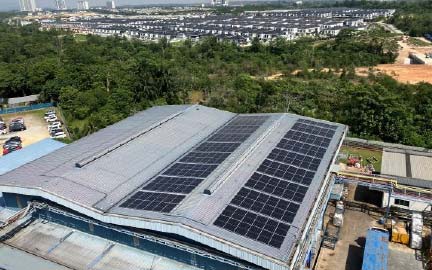
Lion has changed over its power contracts to power companies that supply 100% renewable energy sources. As a result, all domestic plants have been using renewable energy since January 2023 as has our headquarters (Kuramae, Taito Ward) since April 2023 (partially using J-Credit).
We began by utilizing renewable energy and green power certificates at our domestic offices, and were able to eventually realize our goal of converting all our offices’ electricity consumption to that from renewable sources in May 2023. In addition, at Lion’s overseas operating sites, we are gradually advancing the switch to renewable energy and aim to purchase 100% renewable energy across all of Lion’s operating sites by 2030. Specific efforts include utilizing m-REC (Malaysia Renewable Energy Certificates) at Southern Lion Sdn. Bhd. (Malaysia) and GEC (Green Electricity Certificates) at Lion Daily Necessities Chemicals (Qingdao) Co. Ltd.
Lion Corporation (Thailand) Ltd. purchased T-VER* credits (derived from biomass power generation) to offset the CO2 from its electricity purchases for 2024 and continued the practice in 2025.
* T-VER is a carbon credit system operated by a Thai public organization.