Close
Close
Upholding its founding spirit of “benefiting society through its business activities,” Lion has long promoted economic development and has built a considerable track record in addressing environmental and social issues through its business activities.
At present, we are working toward achieving our management vision for 2030 of “Becoming an advanced daily healthcare company” backed by our purpose, “Make a difference in everyday lives by redesigning habits: ReDesign,” which serves as our management foundation in line with the overarching aim of contributing to a sustainable society while driving business growth.
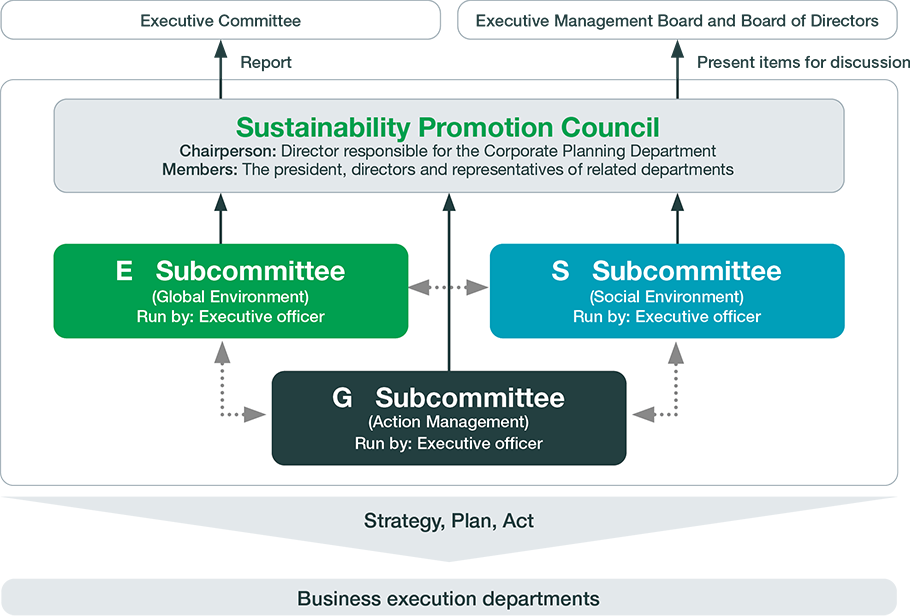
In order to promote sustainable management, until 2020 we held the Sustainability Promotion Meeting, comprising all executive directors, including the president, and related departments. In 2021, we revised the Sustainability Promotion Council, convening twice a year.
We have established the E, S and G subcommittees under the council, each headed by an executive officer, to promote and monitor initiatives for the Sustainability Material Issues. Decisions made by the council are shared with the Executive Committee and, as necessary, presented to and discussed by the Executive Management Board and the Board of Directors, before being reflected in the business activities of the business execution departments.
With an eye to achieving its management vision of “Becoming an advanced daily healthcare company” by 2030 and contributing to the Sustainable Development Goals (SDGs), a set of shared global goals for 2030, the Lion Group has established the Lion Group Sustainability Material Issues and objectives for 2030.
We have identified 13 Sustainability Material Issues that serve as a roadmap for creating value in businesses in which the Group has an advantage, and for fulfilling our corporate social responsibilities. Within this roadmap, the Group has positioned “creating healthy living habits” and “promoting environmental initiatives for a sustainable planet” as top-priority material issues in which the Group must invest management resources to secure a competitive advantage. Aiming for a higher level of achievement, the 2030 objectives include quantitative indicators for evaluating our progress. In light of changes in the social environment, such as the spread of COVID-19, we reviewed our objectives and indicators in 2021 and 2025, and in 2024 we revised certain calculation methods.
Taking an integrated approach that incorporates sustainability into management strategy, the Lion Group aims to contribute to the realization of a sustainable society and achieve further business growth.
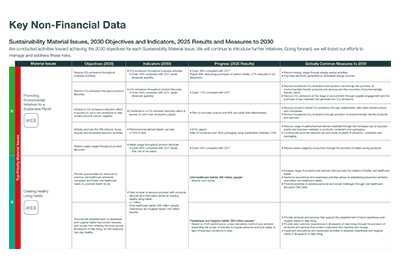
| Material Issues | Objectives(2030) | Progress (2025 Results) |
|---|---|---|
| E(Environment) Top-Priority Material Issues ① 
|
Reduce CO2 emissions throughout business activities. |
|
| Reduce CO2 emissions throughout product lifecycles. |
|
|
| Achieve a CO2 emissions reduction effect in excess of Lion’s own emissions to help society become carbon negative. |
|
|
| Actively promote the 3Rs (reduce, reuse, recycle) and renewable resource activities. |
|
|
| Reduce water usage throughout product lifecycles. |
|
|
| S(Social) Top-Priority Material Issues ② 
|
Provide opportunities for everyone to practice oral healthcare whenever necessary and foster oral health care habits to promote health for all. |
Total number of persons provided with products,services and information aimed at creating healthy living habits *Source: Lion survey |
| Promote the establishment of cleanliness and hygiene habits that prevent bacteria and viruses from entering the body across all aspects of daily living, so that everyone can stay healthy. |
Total number of persons provided with products,services and information aimed at creating healthy living habits *Based on 2024 performance, a new calculation method was adopted, expanding the scope of activities to include personal and food safety, in light of business conditions in Asia |
|
| S(Social) ③ 
|
Establish an organization that enables new value creation by appointing decision-makers with diverse values, thinking, and attributes. |
|
| S(Social) ④ 
|
Create an environment that helps employees fulfill their ambitions through synergy between work and private life. |
|
| S(Social) ⑤ 
|
Strengthen employees’ problem-solving skills to ensure that each individual can contribute to the execution of our management strategy. |
Average score* across four competencies—goal setting, solution orientation, critical thinking, and logical reasoning—in multi-source behavioral assessments *Based on a 0–100 scale using a multi-rater evaluation method (360-degree feedback) conducted by an external provider, incorporating input from supervisors, subordinates, and colleagues ⇒ Management: 73, Non-management: 63 (Japan) |
| S(Social) ⑥ 
|
Support mental and physical healthcare for employees to reinforce Group human resources and achieve sustainable corporate growth. |
|
| S(Social) ⑦ 
|
Enhance systems to ensure compliance with occupational safety and health laws and regulations and to enforce safety awareness thoroughly for the safety and peace of mind of employees and outside partners working on site. |
|
| S(Social) ⑧ 
|
Ensure respect for the human rights of all stakeholders affected by Group business activities, in line with the LION Human Rights Policy. |
|
| S(Social) ⑨ 
|
Implement sustainable procurement with zero tolerance for human rights and labor problems (including child labor and forced labor) or environmental destruction in line with the Sustainable Material Procurement Policy and Lion Group Supplier CSR Guidelines. |
|
| S(Social) ⑩ 
|
Promote and reinforce customer-oriented business activities by improving customer support quality and the value of products and services. |
|
| G(Governance) ⑪ 
|
Build a comprehensive and exhaustive risk management system for identifying and quickly and appropriately dealing with risks to achieve sustainable corporate growth. |
|
| G(Governance) ⑫ 
|
Reinforce effective initiatives to instill compliance awareness and thus earn and maintain the trust of society. |
|
| G(Governance) ⑬ 
|
Build a sound, fair, transparent and highly effective governance system to enable sustainable corporate value enhancement. |
|
* Objectives and indicators for these human capital-related material issues have been revised based on 2025 results.
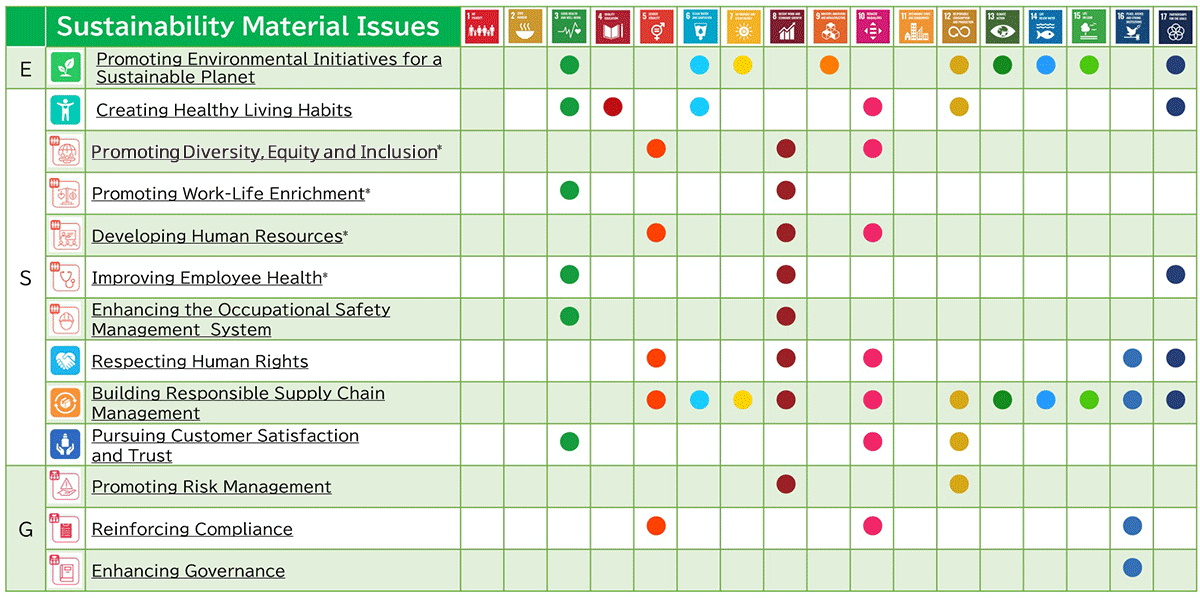
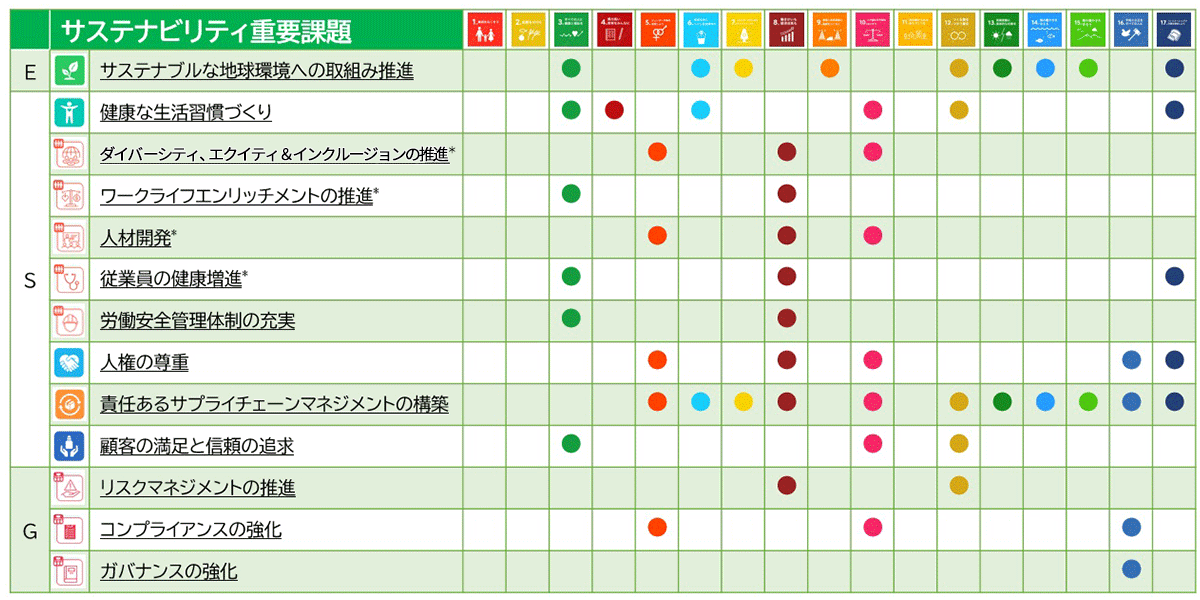
*Objectives and indicators for these human capital-related material issues have been revised based on 2025 results.
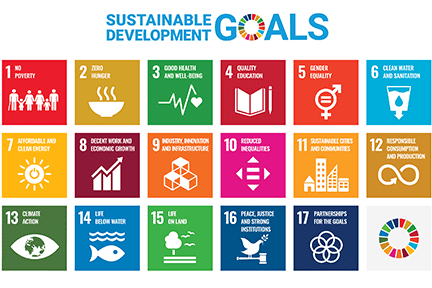
The Sustainable Development Goals (SDGs) are a set of common goals for 2030 established by the United Nations (UN) aimed at the realization of a sustainable world.
The Lion Group’s contribution will mainly be to the realization of SDG 3, “Ensure healthy lives and promote well-being for all at all ages,” through its products and services. At the same time, by pursuing initiatives aimed at realizing the Vision 2030 long-term strategic framework, we will contribute to the creation of a sustainable world, the ultimate goal of the SDGs.