Close
Close
Lion conducts biodiversity conservation activities at all of its operating sites. Its plants, in particular, have expansive premises and handle a wide range of raw materials and thus have the potential to impact the nearby natural environment and communities. We therefore work to reduce the impact caused by plant operations and, in cooperation with local NPOs and other organizations, proactively implement biodiversity conservation activities in the watersheds where plants are located so that the benefits of biodiversity can be sustainably enjoyed throughout local communities.
Each of our operating sites is engaged in biodiversity conservation activities in accordance with our biodiversity policy.
| Operating Site | Activity | Partner Organizations |
|---|---|---|
| Chiba Plant (Ichihara City, Chiba Prefecture) | Management of “Leotope” Satoyama biotope | General Incorporated Association Group 2000 (Learning from the Environment) |
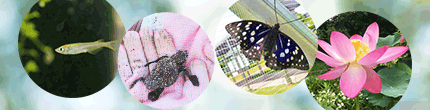
| Odawara Plant (Odawara City, Kanagawa Prefecture) | Breeding of Japanese killifish and fireflies in the Sakawa River basin | Odawara City |
| Osaka Plant (Sakai City, Osaka) | Conservation of loggerhead sea turtles | Sea Turtle Association of Japan Minabe Sea Turtle Research Group |
| Akashi Plant (Akashi City, Hyogo Prefecture) | Hackberry biotope maintenance (Protection of the Japanese emperor butterfly, etc.) |
Tamba-no-mori Park |
| Lion Chemical Co., Ltd. Fine Chemicals Plant (Kamisu City, Ibaraki Prefecture) | Restoration of Kashimanada coastal pine forests (“White Sand, Green Pine Project”) |
Kamisu City Agriculture and Forestry Division Beautification Campaign Promotion Liaison Council |
| Lion Chemical Co.,Ltd., Oleo Chemical Plant (Sakaide City, Kagawa Prefecture) | Maintaining dragonfly pond (biotope) (Breeding of the endangered maiko red dragonfly) |
Ookoshi Dragonfly Land: Sakaide City Association for Dragonflies and Nature: Shimanto City |
| Sapporo Office (Sapporo, Hokkaido) | Efforts to improve the wild flavor of the Toyohira River salmon population (Sapporo Wild Salmon Project) |
Sapporo Salmon Museum |
| Head office (Taito-ku, Tokyo) | Biodiversity conservation workshop held | Taito City Environmental Fureai Kan |
| Hirai Research Institute (Edogawa-ku, Tokyo) | Environmental cleanups in the lower reaches of the Edogawa River and Tokyo Bay | Accredited NPO Edogawa Eco Center |
| Osaka Office (Osaka, Japan) | Wisteria cultivation | Osaka Fukushima Lions Club Wisteria Association |
| Fukuoka Office (Fukuoka City, Fukuoka Prefecture) | Environmental conservation of Hakata Bay (Love Earth Activity, The Save Wajiro Tidal Flat Association) |
The Save Wajiro Tidal Flat Association |
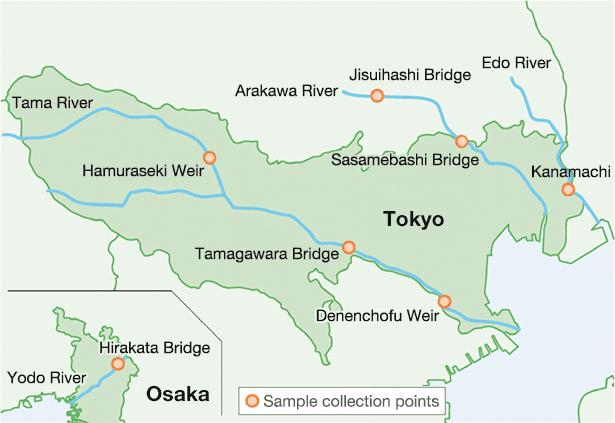
Lion evaluates and confirms the environmental safety of its products during product development, because almost all Lion products are discharged into rivers and streams after their use. Furthermore, Lion takes part in the Japan Soap and Detergent Association’s measurement of the concentrations of four types of surfactants in four river systems near Tokyo and Osaka and evaluation of related ecosystem risk, which it has conducted twice a year since 1998, to confirm that said surfactants are not negatively impacting the environment. The measurements to date have consistently found surfactant concentrations below the maximum level thought to have no impact on aquatic ecosystems, indicating that there is little environmental impact from detergents.
Evaluating and confirming safety is not a task for Lion alone. In addition to gathering and utilizing the latest technological data from in and outside Japan, Lion is working to provide data to other users in order to enhance safety evaluation technologies.